
It is found in circulation as:
Rosemary leaves – Rosanary folium
Rosemary essential oil – Rosemary aetheroleum
Rosemary as an aromatic and medicinal plant was used by ancient peoples. It originates from the Mediterranean. It is found as a wild plant throughout the Mediterranean, and also cultivated in the same places.
Morphological and physiological characteristics
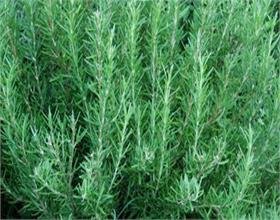
It is a perennial green shrub, with a very strong root system that adapts to poor and dry soils. Its stem has weak, woody, and partially stretched branches. It tolerates low temperatures, but severe frosts and winds damage it greatly. The seed of this plant has a very low vegetation rate, only 30-40%. It lasts a long time until it germinates. The seed loses its viability within 2-3 years. See the photo in Annex 1.
Chemical composition and use of this plant
Green leafy branches contain 0.4-0.6% essential oils
Conditions for success
Climate - It is a plant of hot and sunny regions. It has special requirements for light and heat. It tolerates moderate winters but only at temperatures of -15°C does it suffer significant damage.
Soil - It has modest land requirements, and it can even succeed in deserts.
Cultivation
Propagation can be done by seed through seedlings, but it is not very common due to very poor germination. For this, propagation by cuttings is preferred. The cuttings are planted in well-prepared soil, watered, and after 15 days they root. In these prepared leaves, they are left until autumn or spring when planted in a permanent location. This form of propagation by cuttings is usually done when the plants are dormant. Preferably early in spring. Planting in a permanent location in autumn. During summer, these seedlings are watered, fertilized, fertilized, and protected from pests and diseases.
Seedling planting – autumn planting is preferred, while spring planting only when autumn planting cannot be done. If it happens in spring, it should be done as early as possible. Due to the size of the stem growth, the planting distance should be about 1m x 1m
Care
It includes watering, feeding, and watering.
Weeding - Has two functions: maintaining loose soil and removing weeds. Very important at first until the plants develop, then they cover the space and prevent weed growth.
Irrigation - It is very important in dry years. If possible, watering once or twice, too much will affect plant development and yield.
Harvesting – The exploitation of rosemary begins in the second year. Young stalks 10 cm long are cut and then either sown or immediately distilled.
Yield - In the first 2 years, only rosemary maintenance is preferred, while from the third year onward, the necessary harvesting begins. The yield for fresh plants is 3-4 tons/ha, while for dried plants it is 1-2 tons/ha. If distilled, 40-45 kg of essential oil is obtained per hectare.
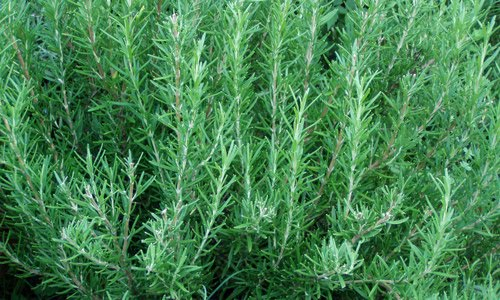
Rosemary – Rosmarinus Officinalis L.
Available in: SHQ, ENG, SRB