
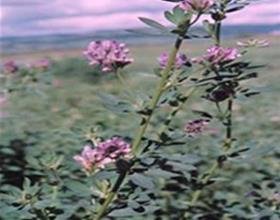
Alfalfa is a perennial legume and one of the most important forage crops; it plays a significant role in feeding animals, especially cattle, for dairy production, and also improves soil structure.
The economic and nutritional value of alfalfa is multifaceted in animal feeding; in its green state and in the form of dry grass (hay), it constitutes a very valuable feed with high protein and energy values for all types of animals.
The high productivity of alfalfa, its ability to regenerate quickly, and the large presence of leaves rich in proteins and vitamins make this plant a first-class forage producer. The only drawback that alfalfa has is that it causes tympani (stomach bloating) in cattle when they graze on alfalfa in the early stages of the plant and when there is too much moisture. It can produce 4-5 mowings or even more within a year.
Morphologically, alfalfa is a legume with very strong axial roots equipped with lateral root branches that can penetrate very deep into the soil (3m or more). Like all other legumes, the roots of alfalfa are equipped with tubers where nitrogen bacteria capable of absorbing free nitrogen from the air grow and develop.
Under favorable climatic and soil conditions, alfalfa exceeds 1 meter in height. Alfalfa stalks have the highest nutritional value of all species. Alfalfa stalks can be prepared from plants cut before flowering, during flowering, and after flowering. We achieve better quality of alfalfa stalks when they are mowed during the bud formation stage. During the harvesting of alfalfa stalk, care must be taken not to lose its nutritional value. Alfalfa stalks are characterized by higher amounts of proteins, calcium, and carotene compared to meadow hay.
The chemical composition of alfalfa hemp depends on the phenophase of alfalfa development. Protein content ranges from 10.8-20%, cellulose from 19.8-35%, fat from 1.27-2.3%, some from 1.2-1.52%, and phosphorus from 0.20-0.22%.
The nutrient content in the alfalfa side ranges from 0.41-0.53 NjU. All animals eagerly consume the alfalfa side, especially dairy cows. Cattle are given between 3-14 kg per day depending on the stage they are in.
Therefore, we recommend all milk-producing farmers to plant this crop or increase their existing areas because it will greatly help them by significantly increasing the amount of milk on their farms, since when harvested and professionally preserved, alfalfa is a very good source of protein, especially considering that farmers find it difficult to balance this ingredient in their ration.
Available in: SHQ, ENG, SRB