
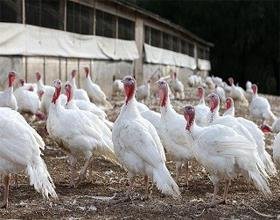
The turkey is a large bird mainly raised for meat, and its meat belongs to the category of high-quality meat due to its protein content and low levels of fat and cholesterol. In the past, turkey meat was mostly used for various celebrations, but now it is also used year-round in separate and processed portions.
Breeding turkeys – the traditional method Springis the best season for hatching and natural breeding for the traditional breeding of turkeys. It is best that hatching eggs are not older than 4 days, but if they are well stored at a temperature of 15-18 °C and humidity of 75-80% relative humidity, eggs aged 10-14 days can also be used.
During the natural hatching and breeding of birds in the first weeks of life, care must be taken because birds are very sensitive. The guinea fowl, which has hatched chicks, cares for the young, keeps them warm, and protects them from predators. Special attention should be given to the space where they can comfortably spend the night and be protected from the cold, but also from various predators where the guinea fowl cannot protect them at night.

Production of turkey meat
- Fattening the turkey - the extensive method
- The fattening of the sea rooster – the intensive method, the broulers
- Fattening of hens and turkeys after breeding
Extensive thickening of turkeysThe duration of extensive thickening of turkeys varies depending on the preferred weight. In many cases, turkeys gain weight between 24-32 weeks of age. During the first 60 days, the birds are fed like breeding birds, while for 60-150 days they are raised on pasture with feed mixtures of concentrates depending on the quality of the pasture. After day 150, the turkeys are fed intensively with full portions for 60 days. During this time, the turkeys reach a weight of 5-9 kg.
It is important to mention that this obesity system consumes about 4 kilograms of weight
kilogram of food.

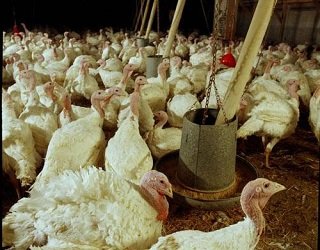
Intensive thickening of seafood
Intensive fattening of turkeys or brooders means the fattening of both sexes from the first day of their life until weeks 12-16 when they reach a weight of 4-6 kg. Meat produced this way is tender, juicy, and tasty, and the weight gain is quick and economical because 2.5-3 kg of feed are consumed per 1 kilogram gained. The feed should be given in sufficient quantities, and it is good that the concentrated feed is pelleted in sizes depending on their age.
Fattening of guinea fowl after breeding This fattening occurs after the completion of eggs or after the reproductive process of both sexes, and the purpose of such thickening is to fatten the guinea fowl that have been in an effective breeding state during the production cycle. This thickening is often achieved only with corn and pasture, where 100-200 heads can be kept per hectare. The meat obtained this way is of good quality because it consists of hens and turkeys that are one year old.
Available in: SHQ, ENG, SRB