
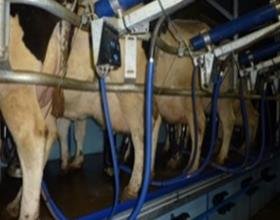
The dairy industry in Kosovo has experienced significant development in recent years, with farmers organized and market-oriented. Investments so far in the dairy sector have shown visible results in the development of farmers from the family economy level to market-oriented farmers to the dairy processing industry.
Although significant improvements have been made, the dairy sector continues to face problems with farm sustainability due to farm size and the high level of fragmentation of agricultural land, high production costs, and losses caused by poor farm management and milk quality.
This article will discuss improving milk quality.
Procedures for improving milk quality
To make milking cows easier, we need to understand the milking process as well as possible because it is a closely linked action between the worker, the cow, and the milking system. To ensure that everything is done properly before the milking process, it is recommended to establish Standard Operating Procedures (SOPs) related to cow milking rules.

What are the standard procedures:
· Hygiene of the person performing the milking
· Hygiene of milking equipment
· Cleaning hands before each milking.
· Inspection of milking equipment
· Ensuring a calm environment for the cows during milking
The main practices regarding cow milking are divided into:
- Pre-milking practices
- Practices during milking
- Post-milking practices
What are the practices before milking
Cleaning the Udders - The main goal of cleaning the udders is to reduce the number of bacteria in the teats before the milking machine is placed on the cow's udder. The cow's udder must be cleaned and thoroughly dried. Placing the milking machine on a wet and poorly cleaned udder increases the risk of bacterial growth and mastitis. For cleaning the cow's udder, a minimal amount of water should be used only in cases where the udder is very dirty, but in this case, if water is used, the udder must be thoroughly dried. There are different methods of cleaning or drying the cow's udder, such as dry palomas and cloth towels. Care must be taken to use separate towels or palomas for each cow. There are also various products available on the market for cleaning cow udders.
Disinfecting the udders with iodine - Pre-immersion of the udders helps control environmental mastitis. This procedure is always practiced, but after treatment with iodine, the udder must be cleaned and dried. It is also important to sequence the milking of the cows. Cows with mastitis and cows treated with antibiotics or any other medication should be milked at the end and separately from the other group of cows. Their milk should not be delivered to dairies or consumed.
Before milking cows - First, the first two or three streams of milk should be milked in the cups before milking and checked to see if there is any change in the milk. Milking the cows should never be done in the hands, on a towel, on the cow's feet, or in the place where the cow stands. Milking the first streams has a significant impact on preparing the cow for milking and helps in detecting mastitis. It is best to do the milking of the first curricula before cleaning the udder.
Practices during milking
Milking system control – The vacuum level must always be checked at the beginning of each milking; the vacuum level should be 48-50 Pa, while the number of pulses is m
The milking bucket should be between 50 and 60 minutes. Parts of the tires of milking machines should be replaced every 6 months.

Placing the milking machine at the appropriate time - It is a fundamental rule that the milking machine is set within 60 seconds after the first handling of the cow's udder. When placing the milking machine, care must be taken to let in as little air as possible. The milking machine clutch should be kept twisted until the moment it is placed on the cow's udder to allow minimal vacuum loss in the system. Air entry during the placement of the milking machine causes: vacuum fluctuations which lead to mastitis and foam formation in the milk that can cause changes in the taste of the milk. We must also ensure that the milking machine does not slip out of the cow's udder.
Avoiding excessive milking - One of the most important tasks during the milking process is to remove the milking machine at the right time. During milking, care must be taken not to do excessive milking, as this negatively affects the health of the cows. When the milk has been removed from the udder, the milking equipment must be removed. This can be determined by manual inspection of the udder or if the milking device has a system that detects the small flow of milk. Before the milking flock leaves the cow's udder, the vacuum in the milking machine must always be stopped.
Post-milking practices

Disinfecting the nipples - Application of disinfectants
After the milking process, it helps prevent mastitis. Iodine is one of the most widely used disinfectants. Soaking teats in iodine has different roles: it destroys microorganisms and softens the skin of the nipples
Cleaning themilking equipment and closing the teat canal after milking. It is preferable that after the milking process, animals have food available so they do not start lying down, because the udder canal remains open for up to 30 minutes after milking. In this case, if udder disinfection has not been performed and the cow is in contact with bacteria, there is a very high possibility of bacteria entering the udder, which will cause problems in the cow's udder.
Cleaning of milking equipment
After each milking, the milking equipment with an alkaline base must be cleaned. This procedure should be repeated after each milking. First, the milking machine and other equipment used during milking should be rinsed with cold water until the water becomes clear. Then the alkaline or base solution is prepared as follows: if the base concentration is 80%, then 50 to 80 milliliters of base should be added to 10 liters of water. The water should be at a temperature of 60–70 °C. All milking equipment should be cleaned with this solution. The milking equipment should remain in this solution for 10 minutes. Special brushes should be used for cleaning. Similarly, the parts of the absorbent tires should be cleaned in the same way. After washing with the base detergent, all equipment should be rinsed with water to ensure the removal of any residue of the basic detergent
Cleaning of milking equipment with acid
Milking equipment should be cleaned with acid once or twice a week, depending on the amount of chlorine in the water. Acidic dissolution is prepared as follows: 50-80 milliliters of acid are mixed in 10 liters of water. All milking equipment should be cleaned with this solution. The water temperature for cleaning should be 60-70 °C. The cleaning time should last about 5 minutes. Special cleaning brushes should be used. Care must be taken when using the acid.
Milk cooling –
Milk must be cooled within two hours of milking if not processed. Proper cooling of milk prevents or reduces bacterial growth. Milk should be cooled to a temperature of 4 ºC. The cooling place should be in rooms separate from the barn.
Available in: SHQ, ENG, SRB