
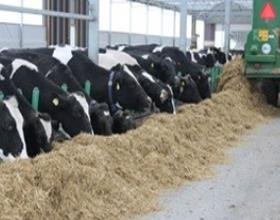
The composition of nutrients depends on many factors. This includes the quality and degree of soil fertilization, the timing of harvesting or grazing, food preparation, and climatic conditions. The average composition of some fresh foods is presented in Tables 1 and 2. These tables provide a practical guide to balancing portions.
Table 1. Examples of bulky foods and their nutritional composition per kg of fresh products (g/kg)
|
Type of food |
L.Th g |
Road. g |
TDN g |
NEL McAl |
Prote. g |
What g |
P g |
Maximum/kg/ration. |
|
Fresh alfalfa |
200 |
50 |
120 |
0.30 |
45 |
4.4 |
0.7 |
|
|
Beer Brew / Wet |
220 |
30 |
150 |
0.35 |
55 |
0.6 |
1.2 |
10 kg per serving |
|
Hay silage |
450 |
100 |
280 |
0.60 |
75 |
2.5 |
1.0 |
|
|
Corn silage |
300 |
75 |
180 |
0.35 |
20 |
0.8 |
0.7 |
|
|
Dried alfalfa |
900 |
200 |
540 |
1.30 |
200 |
13.4 |
3.0 |
|
|
Undisputed alfalfa |
920 |
240 |
550 |
1.25 |
175 |
14 |
2.3 |
|
|
Barley straw |
910 |
380 |
430 |
0.9 |
40 |
2.7 |
0.7 |
|
|
Oat straw |
920 |
375 |
460 |
1.05 |
40 |
2.2 |
0.6 |
|
|
Wheat straw |
900 |
375 |
400 |
0.85 |
30 |
1.6 |
0.5 |
|
|
Corn husks |
850 |
300 |
510 |
1.15 |
50 |
4.9 |
0.8 |
|
Table 2. Examples of energy- and protein-rich foods and the composition of foods in kg of fresh foods (g/kg)
|
Type of food |
L.Th g |
Cel. g |
TDN g |
NEL McAl |
Prote. g |
What g |
P g |
Maximum % in concentrate |
|
Elbi |
900 |
50 |
750 |
1.8 |
115 |
0.5 |
3.4 |
70 |
|
Corn |
900 |
25 |
800 |
1.8 |
95 |
0.5 |
2.8 |
50 |
|
Oats |
900 |
105 |
690 |
1.55 |
120 |
0.8 |
3.4 |
25 |
|
Wheat Himet |
900 |
100 |
630 |
1.4 |
155 |
1.3 |
11.6 |
25 |
|
Beet sugar beet stalks |
900 |
160 |
700 |
1.55 |
90 |
5.6 |
0.9 |
15% per meal |
|
Beer Brewing |
920 |
130 |
650 |
1.5 |
275 |
3 |
5 |
10 |
|
Soybean pomace |
900 |
60 |
760 |
1.65 |
440 |
3.5 |
6.4 |
|
|
Sunflower Pulp |
920 |
110 |
700 |
1.6 |
450 |
3.8 |
10 |
20 |
BULKY FOODS
High-quality bulky foods are a very good source of cellulose for the optimal functioning of rumen. This relates to the influence of flora on rumen. For the purpose of preparing and increasing the nutritional values of bulky foods, it is very important that they are mowed or grazed at the optimal time before the maturation phase of the plants. Approximately, the nutritional value of all bulky foods is higher before flowering. Their nutritional values and digestibility decrease after this time. Corn, to be silaged, must be harvested at the peak ripeness stage, so that the corn kernel has higher nutritional values.
Brewing (wet)
It is a byproduct of the beer industry. It is a feed with protein and average energy. It is very tasty, and it is best to provide 5-10 kilograms per day in feed for dairy cows. It should be given fresh or used from silaged storage. If the fresh beer pulp is silaged, it takes 4-6 weeks to ferment. It is important that the place where the silage is made has good drainage so that the silage-covered mass does not spoil.
ENERGY FOODS
Grains have a high energy content and a low percentage of protein. Table 2 shows the maximum amount that can be used in the preparation of the concentrate.
Elbi
Barley should be roughly ground or crushed for maximum use in dairy cows; otherwise, if not ground, barley will pass through the digestive tract partially undigested. Corn has about 95% of the energy value and is a very tasty and ideal feed for cattle.
Corn
Corn is a very tasty food and meets the highest energy requirements. However, corn has a low percentage of protein, tough fibers, and minerals. Corn can be used as a primary source of energy. In order to make the best use of energy, it should be properly balanced with other foods in the ration. It should be used ground or broken, or animals can be fed by silaging whole corn with a high moisture content. Ground corn should not be stored for too long because it spoils very easily and its nutritional value decreases.
Oats
Oats are very rich in cellulose, so it is recommended to mix oats with other ground grains for maximum utilization. Oats have a positive effect on the production of milk and milk fat. Broken oats are a very good feed for calves. The high cellulose content contributes to the early development of rumen in calves.
Wheat Himet
It is a byproduct of the wheat flour industry and is a very tasty food. It is low in calcium but richer in phosphorus than other grains and their by-products. For this reason, care must be taken regarding the amount of wheat humides per serving. Wheat husks are rich in cellulose and have a laxative effect.
Beet sugar beet stalks
Dry sugar beet slices are usually found in unprocessed form. They are a good source of energy for dairy cows that produce large amounts of milk. They also have a high percentage of proteins (45%) that do not dissolve in rumen or undegraded proteins. Beet sugar molasses can be added in some cases to enhance the flavor of the food. Coarse fibers are highly digestible; for this reason, sugar beet slices can be added to a ration of up to 3 kilograms per day.
Available in: SHQ, ENG, SRB