

Establishing an apple orchard is a long-term investment (several years) and requires preliminary research of a number of factors to minimize mistakes during this investment. The main factors to consider before establishing an orchard are natural and economic factors.
Naturalactors
The main natural factors are: climate, soil, and relief
climatic factors
Temperature – critical temperatures for normal apple development should be taken into account, including minimum and maximum temperatures (-25 to +35°C), especially low temperatures, taking into account both the type of tree (apple -24 to -38 °C) and the phenophases of development (in apples: bud buds -1.0 to -3.9, open flowers – 1.6 to -2.2, newly formed fruits -1.1 to -2.0 °C). Also, exposure to a large number of years of low temperatures is a key factor for normal tree development. In certain cases, to protect against extremely low temperatures, various materials such as straw between rows of trees are lit, then protection through artificial rain, etc.
Humidity – this includes atmospheric precipitation, rain, snow, hail, on which air and soil moisture depend. Based on data about these factors, agrotechnical measures are taken: in the absence of rainfall, irrigation is applied; to protect against hail, protective nets are installed; in case of excess water in the soil, drainage is applied, etc.
Snow - affects trees in various ways but is an alternative source of water. Snow cover is often a good insulator to protect against frost; only in cases of large layers can it cause branch breakage in some types of trees.
Hail – this never brings any benefit; hail damage can be direct or indirect. Direct damage is mechanical damage to fruit, leaf, branch, and trunk. Indirect damage causes weakening of resilience, reduced productive capacity, and from the wounds caused, creates conditions for the development of pathological diseases. Light – it is very important for the normal development of physiological processes such as photosynthesis, so every orchard must have appropriate exposure to sunlight (north-south rows and trees 2-2.5 m tall make better use of light).
Wind – in orchards has both positive and negative effects. The positive aspect is that air circulation reduces the likelihood of diseases occurring; during the flowering phase, it helps pollination.
The downside affects increased perspiration, soil drying, drying of fresh branches, hindering bee work, making care impossible, but strong winds can also cause mechanical damage. Areas exposed to strong winds should be avoided, or protective measures should be taken, such as erecting protective barriers with various woody plants.
Relief
This includes latitude, exposure, altitude, etc. It is very important that the orchard has good sun exposure, then normal air mass circulation; also, the altitude above sea level must be appropriate (for apple trees lower than 1000 m in the continental zone)
Earth
Physical properties – these are decisive factors in establishing an orchard since these properties are difficult to improve and require large investments. Soil with good physical properties should be over 1.5 m thick, drain water well (if a hole is dug, water should be 1 m deep after rain should not remain for more than 3-5 days), and have a good structure with appropriate ratios between sand, clay, and dust. Therefore, for the normal development of the tree's root system, the soil must have an appropriate water, air, and thermal regime where the ratio between water and air in the soil pores should be 60% water and 40% air, while the average soil temperature should be 15-20 °C.
Chemical properties – Unlike physical properties, chemical properties can be improved through agrotechnical measures. pH, CaCO3 (%), Humus (%), Nitrogen (%), Phosphorus (P2O5) (mg/100g), Potassium (K2O) (mg/100g), Ca (mg/100g), Magnesium (Mg) (mg/100g), and trace elements Iron (Fe), Zinc (Zn), Copper (Cu), Boron (B), Molybdenum (Mo), etc.
Biological properties – soil is a very rich environment for organisms; their presence and activity greatly affect soil fertility. Besides breaking down various substances, after their death they also break down into humus. The vast majority of these substances are found up to 30 cm deep in the soil (quilling or deep tillage of the soil before planting trees, among other things, is also done to expand the soil's bioactive layer).
Maintaining ecological balance - is a very important aspect to consider: the use of beneficial insects for biological control, keeping part of the land uncultivated as an alternative environment for insects (at least 3%), establishing green belts, arranging suitable spaces for various predators that feed on harmful insects, etc.
Economic factors
These factors relate to the workforce, market demands and opportunities, industrial fruit processing, etc.
Before establishing the orchard, it is essential to consider several stages:
1. Location selection
2. Preparation of the orchard plan
3. Soil preparation for the apple orchard
4. Apple Seedlings – Planting Technique
5. Installation of the support system
6. Installation of the irrigation system
Location selection
When selecting the location for planting apples, care must be taken to ensure that the economic and natural conditions are adapted to this crop. Specifically, the climate, soil, phytosanitary position, and the condition surrounding the orchard are important. The position of the orchard is conditioned by altitude, and the slope of the terrain is preferred to be gentle. Intensive production can be planned at an altitude of 600 m, although the apple tree can develop at even higher altitudes. An increase in altitude above sea level for every 100 m, the flowering phase under our conditions is delayed by 1-3 days. The difference in vegetation for the South and North poles can be delayed by up to 10 days. The Southern exposure presents the highest temperatures, and the trees bloom more easily, ripen over time, and develop their fruit color. The slope of the orchard negatively affects it because nutrients can be drained, but there is also a risk of erosion. For intensive production, the most suitable slope should not exceed 5%. A location near water surfaces can have a very positive impact on tree productivity; in this case, it positively influences the regulation of spring temperatures by slowing vegetation, helps protect against late spring frosts, and also helps mitigate severe winter frosts. The orchard must not be planted in rows with old trees or forests; then, the orchard site should be chosen where there is light and protected from the wind, and all surrounding trees that may carry viruses and pathogens must be destroyed.
Preparation of the orchard plan
Considering that investments in establishing apple orchards are long-term, proper care must be paid in orchard planning. Within the framework of orchard planning measures, the following should be taken into account:
· Planning the necessary tasks
· Preparation of the parcel plan – sketch
· Selection of cultivars and rootstock
Selection of cultivars and rootstock
Cultivars: When selecting apple cultivars, several characteristics should be taken into consideration: pollination, flowering time, resistance to diseases and pests, vegetation period, frost resistance, post-harvest storage time, and market demands.
Elstar
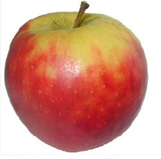
Origin: Dutch cultivar, Golden
Delicious x Ingrid Marie
Ripening time: First decade of September Fruit characteristics: The fruit is moderately large, conical in shape, with a basic green color covered in yellow and red hues, with a sour taste.
Specifications: diploid, vigorous growth, branching with sharp angles, flowering
moderately late. Sensitive to scab and mildew
Mutants: Dalieter, Elshof, Redelstar, Valstar
Granny Smith
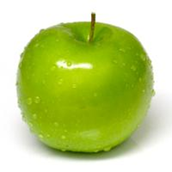
Origin: Australian cultivar obtained from wild French apple seeds
Ripening time: Second decade of October Fruit characteristics: Large cone-shaped fruit with a completely green basic color, tart taste, liquid pulp, and pleasant aroma.
Specifications: diploid, vigorous growth, branching with sharp angles
Golden Delicious
Origin: From spontaneous seedlings
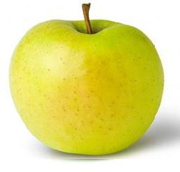
Ripening time: End of September - beginning of October
Fruit characteristics: Medium-large fruit in shape with a basic green color covered in yellow, sweet and aromatic taste.
Specifications: initially it shows rapid growth, then fruit production stabilizes, regular fruiting, and good pollinator. Resistant to powdery mildew and sensitive to scab.
Mutants: Clone B, Reinders, etc.
Golden Delicious ® Reinders
Golden Delicious Reinders is a clone of the golden devilish discovered in Helden-Panningen, Netherlands.
Fruit: Moderately large, elongated, and quite beautiful, with a base color from green to yellow, and when ripe it turns yellowish-golden. The fruit pulp is firm, liquid, low in acidity, and has a thin skin, and is fully stable in the fruit's networking.
Specifications: Medium-flowering cultivars, ripening time mid-September until the end of September, The Crown has medium yield, regular and high fruiting, The most suitable rootstock is M9, can be stored in storage until mid-January and in the refrigerator until mid-July
Idared
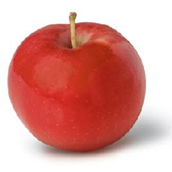
Origin: American cultivar, Jonathan x Wagner
Ripening time: First decade of October Fruit characteristics: Large, round, slightly pressed fruit with a basic yellow-green color, partially or fully covered with red color, with a sweet to sour taste.
Specifications: cultivars with high productivity and regularity, medium yield and excellent pollination. Resistant to scab and sensitive to powdery mildew.
Melrosa
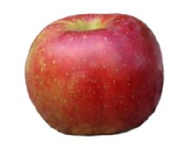
Origin: Jonathan x Red Delicious Ripening time: Second decade of October Fruit characteristics: Medium-large fruit, red color mixed with yellow, sour to sweet taste with firm and juicy flesh. Specifications: Immediate after harvesting is preferred for storage and consumption can begin shortly.
Rootstocks: Today, in intensive apple production, mostly low-yield vegetative rootstocks are used, which allow an increase in the number of plants per unit area, thereby boosting yield and reducing production costs.
Among the most commonly used vegetative rootstocks for Apple are: M9 and M26 (low yield), MM 106 (medium vigor), etc. When selecting the rootstock, the cultivation system, the agrotechnical methods to be applied, as well as the vigor vigor, must be taken into account.
Preparation of the parcel plan – sketch
It represents a very important moment where the measurement and division of the plot will be made, as well as the forecasting of the paths (at the beginning, end, and sides of the plot), the planting distances of the seedlings (depending on the rootstock), and the direction of the rows (recommended North-South).
Available in: SHQ, ENG, SRB