
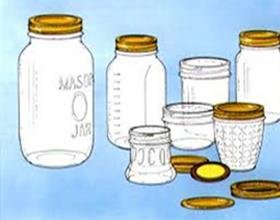
What is the reason the jar breaks?
Every fracture looks different and has a specific cause.
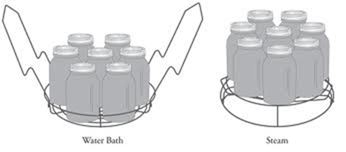
Thermal shock is characterized by a crack that passes around the base of the jar, sometimes also transmitted to its side. To prevent thermal breakage:
• Avoid sudden temperature changes, such as placing hot food in a cold jar, or placing a cold jar in hot water, placing a hot jar on a cold or humid surface. Keep jars in hot water until full.
• Use a metal mesh on the container where the jars will undergo heat treatment.
• Avoid using metal tools to remove air bubbles or steel wire to clean jars.
An internal pressure interruption begins on the side of the jar. It is in the form of a vertical crack that forms two fissures. To prevent pressure fractures:
• Make sure there is enough space in the jars, as the food expands after heating.
• Maintain stable heat during heat treatment.
Measures to prevent fractures:
• Handle jars carefully. Jars that have fallen, been hit, or lightly impacted should be carefully inspected as they can pose a significant risk once filled with product and subjected to heat treatment.
• Avoid using metal tools to remove air bubbles.
• Avoid using old jars. Jars have a shelf life of about 10 years. Old jars can be used a maximum of 5 times, but not the lid, which must be replaced with each use.
How can you tell if a jar of canned food is sealed?
Leave the jars in the cold for 12 to 24 hours, and perform the "seal" test with one of these options:
• Press the middle of the cap with your thumb. If the cap makes a clicking sound when you lift your finger, the lid is not closed.
• Hold the jar at eye level and look through the lid. The lid should be concave (slightly lower - curved in the center). If the center of the lid is flat or swollen, it cannot be closed.
What is the best way to clean jars before filling them?
All processed products, jam, jam, and pickled products processed in less than 10 minutes should be placed into sterilized jars.
Before each use, wash empty jars in hot water and clean them by hand or in a dishwasher. Any impurity remaining can cause an unnatural taste and affect the color. These washing methods do not sterilize the jar.
Hard water is easily removed from the jar during heat treatment (pasteurization of the jar after filling with product) with a solution containing 1 cup of vinegar (5% acidity) in 4 liters of water.
Share
Available in: SHQ, ENG, SRB