
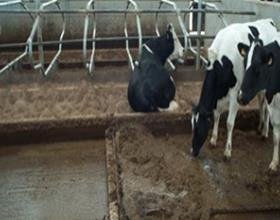
Organic manure is an unavoidable by-product from animal farms, so all farmers involved in animal husbandry must be careful in manure management and storage. If organic manure is managed properly, it can be a valuable nutritional source for agricultural crops, including animal feed products. Inadequate fertilizer management can result in environmental degradation, loss of minerals contained in organic manure, and the spread of various pests.
Livestock farms must definitely have fertilizer storage facilities to preserve the nutritional value of the fertilizer used for fertilizing agricultural crops. Likewise, storing manure in special depots protects the environment from pollution. If manure is stored in inappropriate places, contamination of groundwater and wells can occur. Additionally, farmers, by managing fertilizers, also protect the air from contamination because it is known that nitrogen (N) passes into the atmosphere very quickly.
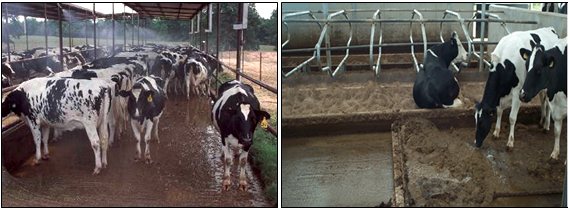
By waste management, we mean all operational aspects:
By waste management, we mean all operational aspects:
- Where and how the fertilizer was produced.
- How the fertilizer is deposited and stored.
- How it has been used or will be used in the end.
| Annual animal production by category | |
| Species/categories | Tone/heads |
| Dairy cow | 7 - 9 |
| Jaws | 3 - 5 |
| Viiea (6 - 12 months old) stable regimen | 2 - 3 |
| Viiea (6 - 12 months old) semi-stable regimen | 1.2 - 1.5 |
| Finite (all categories) | 5 - 7 |
| Pigs (without dosses) | 1.0 - 1.2 |
| dosat | 2.0- 2.5 |
| Equines (all categories) | 3 - 4 |
| Birds (average of all types) | 0.01 |
Animals are relatively inefficient at utilizing N, P, and K from food; about 50% of these elements pass through feces. These nutrients can end up in organic manure or, in the case of N, if not well managed, can be lost into the atmosphere.
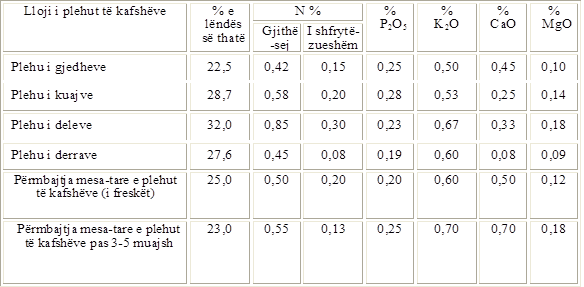
The amount and type of bedding (if any) will also affect the manure content in the barn.The nutrients in significant amounts of organic manure vary by species. For example, manure from broulers can contain four to five times more N, and ten times more P, than organic manure from horses
| Quantities of manure collected annually (tons/head) | ||||
| Duration of stay in the stable (day) |
cattle | horses | sheep/goat | pigs |
| 220 - 240 | 8 - 9 | 6 - 7 | 0.8 - 0.9 | 1.5 - 2.0 |
| 200 - 220 | 7 - 8 | 5 -6 | 0.7 - 0.8 | 1.2 - 1.5 |
| 180 - 200 | 6 - 7 | 4 - 5 | 0.6 - 0.7 | 1.0 - 1.2 |
| 180 | 4 - 5 | 3 - 5 | 0.4 - 0.5 | 0.8 - 1.0 |
| 360 days Birds | 0.01 | |||
Animal manure content
The microbiological action of organic fertilizers
Organic fertilizers, under the action of microorganisms, are partially transformed into humus, which improves soil quality. Organic fertilizers play a crucial role in increasing crop yields because they provide the necessary macro and micro elements for agricultural crops. All soil types require organic fertilizer because fertilizer not only enriches it with nutrients but also improves soil structure.Requirements for the use and distribution of manure in the barn
Organic fertilizer must not be distributed in large quantities to the extent that it cannot be absorbed by the soil and without exceeding the standards required by plants on those surfaces and in their vegetative state. The quantities of fertilizer distributed should be based on the balance of the vegetation's needs and the amounts of nitrogen obtained from other sources, as well as taking into account:- The type, condition of the land, and the location of the land surfaces
- Climatic conditions, irrigation, etc.
- Land use including crop rotation or crop rotation
Share
Available in: SHQ, ENG, SRB