

Cheeses are prepared by coagulating milk casein. Milk is pasteurized before being used for cheese production, for the following reasons:
Ø Pasteurization allows for better hygiene;
Ø A better progress of the final maturation process is ensured.
In special cases, for some types of cheese, unpasteurized milk is used so as not to affect the organoleptic characteristics of the final product. This milk is selected to be very pure from a bacteriological point of view.
The milk used for cheese production is also selected by taking into account several factors: The acidifying function of lactic bacteria, which is necessary for the formation of the coagulated mass, is controlled. In fact, the milk used for cheese production does not always provide a suitable environment for the development of cultures. The normal growth of bacterial cultures requires nutrients, such as nitrogenous fractions, vitamins, and trace elements, which, in some cases, are insufficient in the milk.
The cheese production process involves a number of physico-chemical, biochemical, and mechanical transformations.
The milk is collected and filtered to remove foreign particles or even undesirable bacterial forms.
Depending on the type to be produced, the fat is corrected by adding milk cream when the fat percentage should be high, or by removing it if necessary, by centrifuging the milk and transferring the fat for butter production. Then the milk is left in the bathtub for several hours to allow the development of acidifying bacteria and, as a result, a pH reduction of about 6.2. Specific microbial cultures are added to the milk for two purposes:
Ø To develop homolitic and heterolitic fermentation;
Ø To supply the mass with enzymes that are activated during maturation;
The bacteria for inoculation are lactic heads or rods. The former, like Streptococcus thermophilus, act quickly but produce low levels of acidification. The latter, like Lactobacillus bulgaricus, produce slower but more stable acidification. In the production of characteristic cheeses, molds such as Penicillum roqueforti or Penicillum camemberti are used.
1.1 Cheese Making Method
Different types of cheese are produced by going through several stages according to principles developed over many years of experimentation. Each type of cheese has its own unique production formula, often with local differences. Below, some main processing variants will be described.
1.2 Production of the curd mass
Milk treatment
As mentioned above, the milk intended for cheese for most types of cheese should be pasteurized just before the tubes empty in the cheese vat. An exception to this rule is milk for Swiss Emmental and Parmigiano cheeses.
Milk intended for cheese is generally not homogenized without first being recombined. The main reason is that homogenization causes a significant increase in water-binding capacity, making it difficult to produce semi-hard and hard cheeses. However, in the special cases of blue cheese and feta cheese made with cow's milk, the fat homogenizes to a cream consistency by 15-20%. This is done so that the cheese turns out whiter and, more importantly, makes the milk more susceptible to lipolytic activity, through which free fatty acids are formed; these are important ingredients for the taste of these two types of cheese.
1.3 Applying the bacterial culture
Bacterial culture is usually added to the milk at approximately 30°C, while the cheese tank is being filled. There are two reasons why culture is added early to the line, precisely:
1. To ensure a good and even distribution of bacteria;
2. To give bacteria time to "acclimate" to the "new" environment.
The time required from inoculation to the onset of development, also called the pre-maturation period, is 30-60 minutes.
The amount of culture depends on the type of cheese. In all types of cheese, air intake should be avoided when sending milk into the cheese vat, as this would compromise the quality of the coagulated mass and create the possibility of casein loss in the whey.
1.4 Adding the toppings and the yeast
When necessary, calcium chloride and salnitra are added before the yeast. Anhydrous calcium chloride salt can be used in doses up to 20g/100l of milk. The dose of salustra should not exceed 30g/100l of milk. In some countries, the doses are limited or prohibited by law.
The dose of enzyme-based yeast (starter culture) is up to 30 ml of liquid seed with a strength of 1:10,000 to 1:15,000 per 100 liters of milk. To facilitate distribution, the yeast should be diluted with at least twice the amount of water. After adding the yeast, the milk is stirred carefully but for no more than 2-3 minutes. It is important that the milk settles within another 8-10 minutes to avoid mixing the coagulation process and loss of casein in the whey.
To further facilitate the distribution of the yeast, there are automatic dilution systems with the appropriate amount of water and its spraying using special nozzles. Such systems are mainly used in large closed vats or vats (10,000 – 20,000 liters).
1.5 Cutting the curd mass
The curdling time is usually about minutes. Before the curdled mass is cut, a simple test is performed to determine the whey's separation ability. As a rule, a knife is inserted into the surface of the curdled milk and then slowly pulled to remove it until the proper crack is made. The paste (mass) can be considered ready to cut as soon as a glass-looking partition crack appears.
Cutting gently slices the curd mass into granules measuring 3-15 mm depending on the type of cheese. The finer the cut, the lower the moisture content in the cheese when finished. Cutting tool models can vary.
1.6 Preliminary mixing
Immediately after cutting, the curd lumps are very sensitive to mechanical handling, which is why the mixture becomes smooth and soft. However, it must be fast enough to keep the lumps suspended in the whey. The precipitation of the curd mass at the bottom of the vat can cause the formation of plisas (clumps of cheese sticking together). This complicates the work of the mixing mechanism, which must be very strong. Low-fat cheese paste has a strong tendency to settle at the bottom of the vat, which means the mixture must be more intense than for the coagulated mass of high-fat cheeses. Sticky pledges can affect the cheese's structure as well as the loss of casein in the whey.
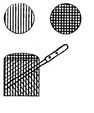
Mechanical treatment of the coagulated mass and continuous production of lactic acid through bacteria help remove whey from the grains.
1.7 Preliminary drainage (discharge) of whey
For some types of cheese, such as Gouda and Edam, it is desirable to remove a relatively large amount of whey from the grains so that heat is applied directly by pouring hot water into the mixture of the curdled mass and whey, which also reduces the lactose content. Some producers also filter the whey to reduce the energy costs required for cross-heating the coagulated mass. For each type of cheese, it is important that whenever it is strained, the same amount of whey is drained—usually 35%, sometimes up to 50% of the volume of the batch in question.
Whey should always be discharged at high capacity, say within 5-6 minutes, because stirring usually stops during discharge and in the meantime, sticky crusts may form. For this reason, whey drainage is done in intervals, usually during the second half of the preliminary stirring period and after warming up.
1.7 Heating/baking/scalding
Thermal treatment during cheese-making is necessary to regulate the curds and acidify the curd mass. The development of acid-producing bacteria is limited by heat, which is thus used to regulate lactic acid production. Besides its bacteriological effect, heat also helps shrink the coagulated mass, accompanied by the removal of whey (sinerese).
Depending on the type of cheese, heating can be done in the following ways:
Ø Steam only in the shirt of the bathtub/cistern
Ø Steam on a shirt coordinated with pouring hot water into the coagulated mass/whey mixture.
Ø Only by pouring hot water over the coagulated mass/whey mixture.
The heating time and temperature program is determined by the heating method and the type of cheese. Heating at temperatures above 40°C, sometimes called ripening, is usually done in two phases. At 37-38°C, the activity of mesophyllic lactic acid slows down, and heating is stopped to control acidity, after which heating continues until the desired final temperature. Above 44°C, mesophilic bacteria are completely deactivated and die if kept at 52°C for 10-20 minutes.
Heating above 44°C is usually called scalding. Some types of cheese, such as Emmental, Gruyere, Parmigiano, and Grana, are scalded at temperatures of 50-60°C. Only the lactic acid-producing bacteria that are more heat-resistant survive this treatment. One of these is Propionibacterium Freudenreichii ssp. Shermani, which is very important for the development of the properties of Emmeral cheese.
1.9 Final blending
The sensitivity of the curd granules decreases with continued heating and mixing. During the final mixing phase, whey is pressed from the granules, mainly due to the continuous development of lactic acid, but also due to the mechanical impact of the mixture.
The duration of the final blending depends on the desired acidity and moisture content in the cheese.
1.10 Final removal of whey and principles of coagulated mass treatment
Once acidity and hardness have been reached and controlled by the producer, the remaining whey is removed from the paste in various ways.
1.11 Final treatment of curd cheese mass
As mentioned earlier, curdled paste can be treated in several ways once all the free whey has been removed. It can:
1. To be carried directly onto molds (round-eyed cheeses)
2. Pre-press it into a block and cut it into pieces of appropriate size to be placed into molds (round cheeses).
3. To be sent for shedding, the final stage of which involves grinding into "pieces" that can salt to dry and can either be placed into rings or, when we want to make cheese of the Filata pasta type, sent unsalted to the boiling-pulling machine.
1.12 Pressing
Once placed into molds or rings, the cheese paste undergoes a final pressing, with four purposes:
Ø To assist in the final removal of whey;
Ø To create texture;
Ø Give it a cheese texture;
Ø To create a cheese rind with long aging periods.
The pressing speed and the pressing applied appropriately on the cheese according to the type. Initially, pressing should be stepwise, because hard pressing compresses the surface layer from the start and can trap moisture in the pockets inside the cheese body. Pressing on the cheese should be calculated per unit of surface area and not according to the cheese, because individual cheeses can have different sizes. Example 300g/cm². For small-scale cheese production, there are hand presses that operate vertically or horizontally.
1.13 Salt
In cheese, as in many other foods, salt generally affects the taste. But salt also has other important effects, such as delaying the action of pure cultures and bacterial processes related to cheese ripening. Adding salt to the coagulated mass causes more moisture to be removed in two ways: from osmotic influence and from the effect of salting on proteins. Osmotic pressure can be compared to the creation of absorption on the surface of a coagulated mass, causing moisture to escape. With fewer exceptions, the salt content in cheese is 0.5-2%. However, the variants of blue and white cheese in brine (slice, domarium, etc.) generally have a salt content of 3-7%.
The exchange of calcium with sodium in paracaseinate, caused by salting, also positively affects the consistency of the cheese, making it smoother. In general, salt is added to the coagulated mass at pH 5.3-5.6, that is, about 5-6 hours after the pure vital culture has been added to the milk, provided that the milk does not contain substances that inhibit bacterial growth.
1.14 Aging
After coagulation, every cheese, except for fresh cheeses, undergoes a series of microbiological, biochemical, and natural processes. These changes affect lactose and proteins, as well as fat, and constitute a aging cycle that varies considerably between hard, moderately soft, and soft cheeses. There are also significant differences within each group.
1.15 Storage in the warehouse
The purpose of storage in the warehouse is to create the necessary external conditions for the best possible management of the aging cycle. For each type of cheese, a special coordination of temperature and relative humidity must be maintained in the different rooms of; storage during the different stages of aging
Available in: SHQ, ENG, SRB