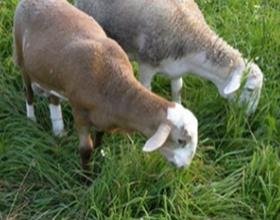
Most sheep feeding programs are based on maximizing the use of bulky foods. Also, bulky foods are good sources of protein and other nutrients if we pay proper attention when preparing bulky feed. Therefore, the quality of bulky feed is very important in sheep nutrition.
When we talk about using bulky feed in sheep feeding, we must consider two important criteria: the quantity of bulky feed and the quality of bulky feed. Both of these criteria are related to the type of bulky feed and the maturity stage at the time of mowing, as well as during the grazing of the animals. In general, legumes, such as alfalfa, clover, etc., are rich in protein, calcium, and more digestible than natural grass.
The ripening stage of the plant has very significant effects in terms of nutritional value. Therefore, one of the main factors affecting the quality of bulky feeds is the mowing stage. Mowing at the early stage or at the first flowering of the plant is a necessary measure that must be undertaken.
In general, the more mature the plant, the lower the nutritional value, and therefore the amount of cellulose increases, resulting in reduced digestibility. Thus, when plants are mowed in the first flowering stage, they will have a higher digestibility percentage, a higher protein content, and sheep can consume larger amounts of bulky feed. Therefore, to preserve the nutritional value of bulky feeds, mowing must definitely be done in the early stage or at the first flowering of the plant.
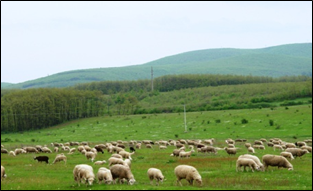
The key to succeeding in the sheep industry is to provide them with bulky feed of good quality, depending on the stage of production they are in. At some stages of production, sheep need to be fed high-quality bulky feed, while at other stages, sheep can be fed even if the quality of the bulky feed is lower.
Available in: SHQ, ENG, SRB