
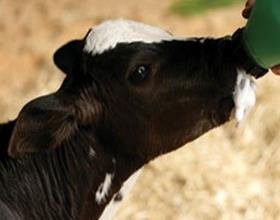
It often happens that during growth, calves do not receive proper care from the farmer. However, recently many farmers are realizing that only if we take proper care in raising them will we have good dairy cows. The first day of the calf is very important, as it determines the rest of its life. The main food on the calf's first day of life is colostrum.
grazers
Colostrum is the first milk that a cow produces immediately after calving. It is thick, with a yellow color, which is very important for the calf's health. Colostrum contains antibodies (imonoglobin) that pass through the calf's intestinal walls without any problem, within the first 24 hours of its life. The intestinal walls begin to close after birth, and for this reason, the sooner calf is given colostrum, the more imonoglobulin the calf will be absorbed. These angioglobulins are very necessary because the calf is born without any immunity. Colostrum increases the likelihood that the calf will be healthy during the first month.
To ensure that the calf has received as many antibodies as possible, it must take colostrum quickly because the intestinal walls are open. Also, colostrum should be taken fresh, because the quality of the colostrum is very important, and colostrum should be given frequently to ensure the calf has received as much as possible. The amount of imonoglobulin in colostrum decreases very quickly.
Feeding on colostrum
During the first 24 hours after birth, calves should drink 20% of their body weight with colostrum. On the second day, about 10% of their body weight will be sufficient with colostrum. For at least the first two days, they should be fed colostrum before switching to milk or milk replacement.

Farmers are often not interested in feeding them a larger amount of colostrum because they fear that calves will get sick from diarrhea. But diarrhea is not a reason to reduce the amount of colostrum. A sufficient amount of colostrum will loosen the calf's stool. When calves have thick stools, it is a sign that the calf has received a small amount of colostrum.

Quality of colostrum

It is better for calves to be fed with their mother's colostrum. However, this is not always possible. When a cow produces little or poor-quality colostrum, the farmer can use colostrum from other cows. Colostrum substitutes are also options, but natural colostrum is more recommended. High-quality colostrum can be given in portions in plastic packages, depending on the size of the farm. The amount of colostrum produced on the first day by the cow can range from 1 to 18 liters. The quality of colostrum is better when cows produce about 8 liters. Whereas when they produce more, the amount of imonoglobulin is lower.
Colostrum equipment

To ensure that calves are receiving colostrum with a low number of pathogens, the colostrum must be pasteurized. Pasteurization will destroy E. coli bacteria and other bacteria that cause various diseases. It is also preferred that the milk used to feed calves be pasteurized after the colostrum.
To determine whether cow colostrum is safe, a colostrum meter must be used. When the meter shows green, the colostrum has a concentration of 60-140 grams of imonoglobulin per kilogram of milk.
| Ranking | Imonoglobulin/kg grazer (g) |
| Very good | >130 |
| Good | <100 |
| Average | 80 |
| Bad | <50 |
Share
Available in: SHQ, ENG, SRB