
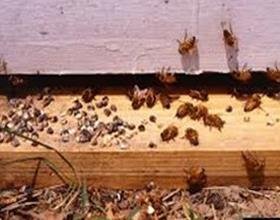
 The disease is caused by the fungus Ascosphaera apise, which affects unsealed larvae for 3-4 days. The disease is transmitted to bees through spores via food, where spores penetrate the digestive organs, accumulate in the middle intestines, and in the honeycomb. For the disease to appear, certain conditions must be met that are favorable for the growth of spores and the development of the disease ascospherosis. Unfavorable conditions in the hive include: increased humidity, poor food (too much honey from saccharin), lack of proteins, poor ventilation, and cold weather. All of this promotes the rapid development of fungal larvae in record time when mycelium (fungal hyphae) appear, causing the rapid death of bee larvae. The disease attacks the larvae on the third to fourth day of life. The first symptoms are visible in the new larvae. Initially, infected larvae take on a pale yellow, soft, calm color, changing shape; the larvae lose body moisture, reduce body size, and eventually look like lime or foam.
 Dead bee larvae are thrown onto the veranda, and the disease always appears during the spawning period.
The spread of the disease can be from beekeepers, bees, varroa, wind, polluted water, and it is very important for farmers to know that the parasite remains viable in the soil for up to 15 years.
Fighting the disease
The fight against this disease is done by creating favorable conditions such as good ventilation of the hive, healthy food, replacement of the queen, etc. As for the infected parts of the hive, and in cases of severe social infection, the bees should be placed in a new hive that has been disinfected.
This disease is also fought with the use of antibiotics such as Geramycin, streptomycin, teramycin, etc. As with fighting other diseases, antibiotics are mixed with syrup, and 1 gram of the aforementioned antibiotic is placed in one liter, and bees are given a small amount of 200 million every other day so that the bees consume it whole to feed and not to store antibiotics.

Share
Available in: SHQ, ENG, SRB