

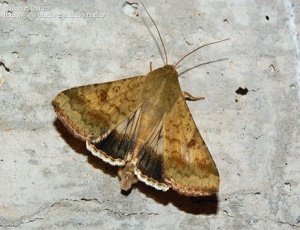
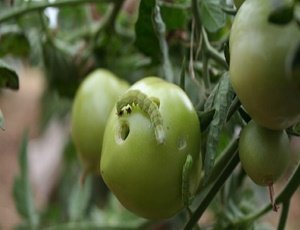
During this growing season, significant damage has been observed in tomato fruits, especially in protected environments. In tomato fruits, these damages are caused by the presence of the cotton-leaved caterpillar (Heliothis armigera), which is a noctuid lepidoptera. The adult insect is a small brown butterfly that lays eggs on leaves one by one or in groups. The damage is caused by larvae that are polyphagous, affecting corn, cotton, tobacco, beans, vetches, eggplants, peppers, potatoes, lettuce, but especially tomatoes.
The damage caused by larvae in tomatoes includes leaf gnawing and flower destruction; larvae enter the fruit mainly through the stem, forming nests 1-2 mm in diameter, from which new fruits emerge and damage them, rotting and falling to the ground, while those that are ripening are affected by fungal and bacterial microorganisms and rot.
Development cycle
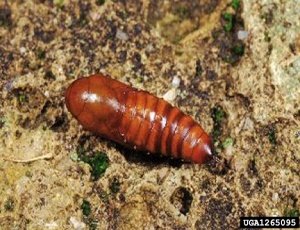
Depending on climatic conditions, this pest appears from May to September, and even later, developing up to 4 generations. The butterflies emerge from the wintering chrysalides at the end of April and the beginning of May. After one week, they mate, and each female lays between 300 and 2700 eggs on the leaves. The larvae emerge after the incubation period, which lasts from 3 to 12-14 days, depending on environmental conditions, and reach maturity in 11-15 days at a temperature of 25-30 °C, passing through 5-6 developmental stages. A large portion of them die during the early stages of development, while cases of cannibalism are frequent in older ages. The larvae that have completed development descend to the ground to be chipped inside a cradle located 2-8 cm deep, and the butterflies emerge after 2-3 weeks. The insect's development cycle depends greatly on environmental conditions, and under favorable conditions, a generation is completed in 35-40 days.
Control measures
Controlling this pest in tomatoes is somewhat difficult due to the behavior of the larvae, which, after a short period of life on the leaves, enter inside the fruits, thus "avoiding" chemical treatments. Chemical treatments are carried out against young larvae. Among the insecticides used against this pest are deltamethrin, alphamethrin; farmers can also use insecticides such as Avaunt 15 EC, Match 5EC, Deltarin 2.5, etc. Farmers must also physically combat this pest by removing affected fruits from the plants and then physically destroying them. Soil cultivation during winter is also effective to bring larvae and chrysalides to the surface, which are thus subjected to the action of atmospheric agents.
Available in: SHQ, ENG, SRB