
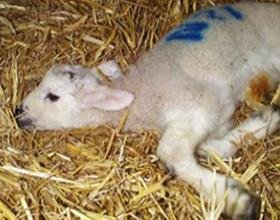
Due to the significant losses it causes to sheep, lambs, goats, and kids, this disease is very important for sheep and goat farmers from an economic perspective.
Who causes enterotoxemia?
The cause of this disease is Clostridium perfrigens, a capsule-shaped bacteria that is immobile and forms spores. It is present in the intestines of healthy animals and is excreted through feces, thus creating sources of infection. The spores of this bacterium are very resistant, so pastures, meadows, and fields represent a constant source of contamination through which goats come into contact with grass, hay, or concentrate.
The presence of the causative agent alone is not enough for the onset of this disease, but also some other prerequisites such as damage to the intestinal mucosa, overfeeding (excessive suckling of lamb and large amounts of concentrate), etc. This disease affects healthy lambs and sheep, especially the more large lambs in the flock.
Signs of the disease?
Symptoms appear as a result of poisoning of the body with the toxins produced by this bacterium. In sheep, depending on the type of poison, symptoms include stomach pain, discomfort, bloating and bloody stools, rapid breathing, and rapid death (12-14 hours).
In young lambs, from 1-3 days up to 14 days, the disease causes contagious dysentery, from which the lambs become massively ill. It manifests with high fever, separation from the mother, bloody stools, dehydration (loss of fluids), fainting, and death within 24-36 hours.
Treatment and prevention?
Recovery due to the rapid spread of the disease is not successful, which is why mandatory vaccination is recommended, which should be part of every health protection program. Especially since in cases of dysentery, 30–40% or even up to 70% of lambs become infected, while mortality is 100%.
Protection is provided by vaccinating the sheep near the end of gestation, which also protects the newborn sheep and lambs. If detected earlier, penicillin is the weapon of choice for clostridial infections
Clostridium antitoxin may be helpful, with supportive care including anti-inflammatory and fluid therapy if necessary.
Prevention?
Vaccination is the key! The drowning bacteria (toxoid) vaccine is given twice 4-6 weeks apart. Boost sheep once a year, 2-8 weeks before birth, to ensure adequate levels of antibodies in colostrum; it will protect the young lambs. Lambs should receive the first vaccine at 30-60 days of age (with a booster 4-6 weeks later).
Share
Available in: SHQ, ENG, SRB